Do Solar Panels Survive Hurricanes in Florida?
By Soul Solar Solutions ·
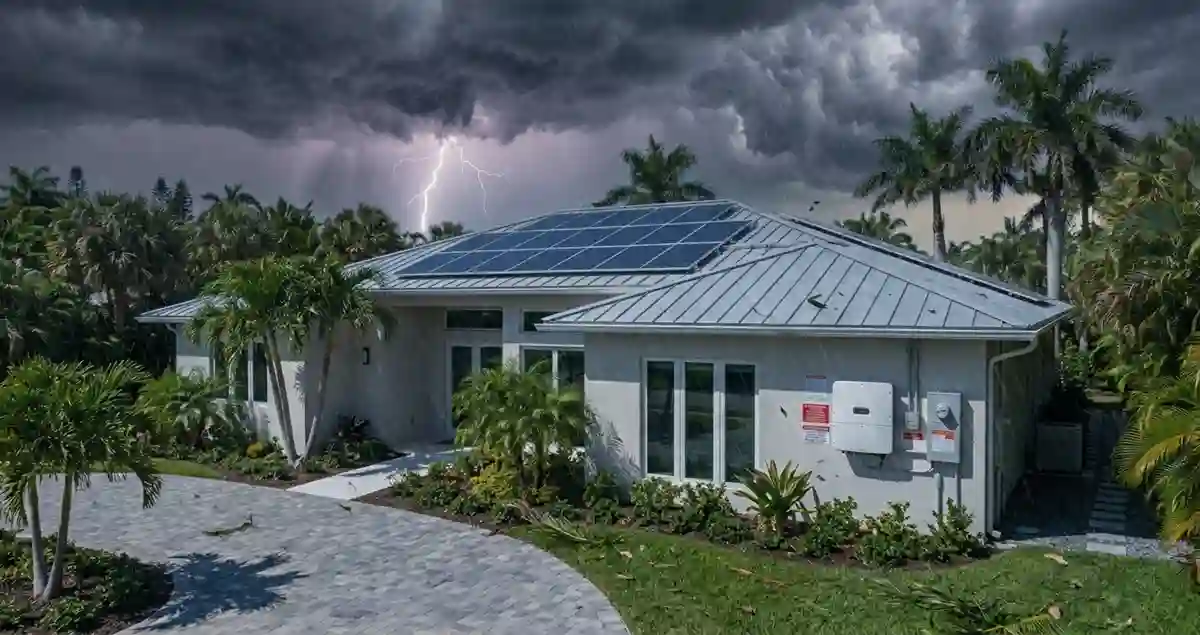
Yes, solar panels in Florida are built to survive hurricanes, and they hold up better than most people expect. Modern panels are engineered to withstand winds of 130 to 160 mph or more, and Florida's building code is one of the strictest in the country. The bigger question during storm season isn't whether your panels stay on the roof. It's whether you'll actually have power when the grid goes down, which is a different thing entirely. If you're weighing solar and hurricane season is on your mind, here's what actually happens when a storm rolls through.
How well do the panels really hold up?
Better than the roof around them, in a lot of cases. Solar panels are certified equipment, tested under simulated storm conditions before they ever ship. Tier-1 panels are rated to handle Category 5 wind speeds, and Florida's code requires solar installations to meet the same wind standards as the roof they're attached to. The real-world track record backs this up. After the 2024 hurricane season battered the state, Florida Power & Light reported that less than 0.05% of the roughly 16 million panels across its sites took any damage, and none of it significant. A well-known national study of tens of thousands of systems found damage rates around 0.1% a year. Those are small numbers for equipment sitting out in the open through some of the worst weather in the country. Here's the catch that matters more than the panel itself: installation quality. A great panel bolted down poorly is still a liability. The racking, the fasteners, and the connection into your roof's rafters are what keep everything in place when a Cat 3 comes through. This is exactly why using a licensed, experienced Florida installer isn't optional.
The part most homeowners get wrong
Let's clear up the biggest misconception in solar. When the grid goes down after a storm, your solar panels shut off too, even in bright sunshine the next morning. That surprises almost everyone. It's not a flaw, it's a safety rule. Grid-tied systems are required to stop sending power the moment the utility goes dark, so that line workers repairing the grid aren't hit with electricity coming back down the wires from your house. So if your neighborhood loses power for four days after a storm, a standard solar-only system sits idle for those four days. If keeping the lights on through an outage is the whole reason you're considering solar, you need to know this going in. Panels alone won't do it.
Battery storage is what keeps the power on
This is where a battery changes everything. Pair your panels with battery storage and your system can safely disconnect from the dead grid and keep running on its own. Your panels recharge the battery by day, the battery carries you through the night, and the cycle repeats until the utility comes back. During the extended outages that follow major Florida storms, that means keeping the essentials going: the fridge, the fans, phone and medical device charging, maybe a window AC unit in one room. Unlike a gas generator, there's no fuel to hunt down when every station in town has a line around the block or no power to run the pumps. The sun shows up the next morning either way. How long a battery lasts depends on its size and what you're running. Most homeowners plan around "critical loads" rather than powering the whole house, which stretches backup time considerably.
Getting your system storm-ready
A few habits keep a Florida solar system in fighting shape through hurricane season, which runs June 1 through November 30: * Inspect before June. Have a licensed tech check your mounting hardware, wiring, and panel condition each spring, before the season starts. * Mind the inverter and battery placement. The panels handle wind fine, but the inverter and battery are more vulnerable to flooding. In surge-prone areas near the coast, they should be mounted well above potential flood lines. * Trim nearby branches. Flying debris causes more panel damage than wind alone. Clear overhanging limbs before a storm is on the radar. * Tell your insurer. Panels are usually covered under your home's dwelling coverage, but it's worth confirming your limits reflect the system's value.
Frequently Asked Questions
Q: Can solar panels survive a hurricane in Florida? A: Yes. Modern solar panels are tested to withstand winds of 130 to 160 mph or higher, and Florida's building code requires installations to meet strict wind standards. Real-world data from recent Florida hurricanes shows damage rates well under 1%, provided the system was properly installed. Q: Will my solar panels power my house during a power outage? A: Not by themselves. Grid-tied solar panels automatically shut off when the grid goes down, as a safety measure to protect utility workers. To keep power during an outage, you need battery storage, which lets your system run independently of the grid. Q: Do I need a battery for solar panels in Florida? A: A battery isn't required for solar to lower your electric bill, but it's what provides backup power during hurricane-season outages. If storm resilience is a priority for you, battery storage is the piece that makes it possible. Q: What happens to solar panels in a flood? A: The rooftop panels themselves are largely unaffected by flooding, but ground-level equipment like the inverter and battery can be damaged by rising water. In flood- or surge-prone areas, these components should be mounted well above expected flood levels.
Solar built for Florida weather
Going solar in a hurricane state means the details matter, from the wind rating on your panels to where your battery gets mounted. At Soul Solar Solutions, we design and install residential solar in Florida with the storm season in mind, so your system is both efficient on a normal day and resilient on the worst one.
If you want a system that keeps the power on when the grid can't, let's talk about panels and battery backup together. Reach out for a free consultation and we'll build a plan around your home.